
On-Site Power Generation for Data Centers

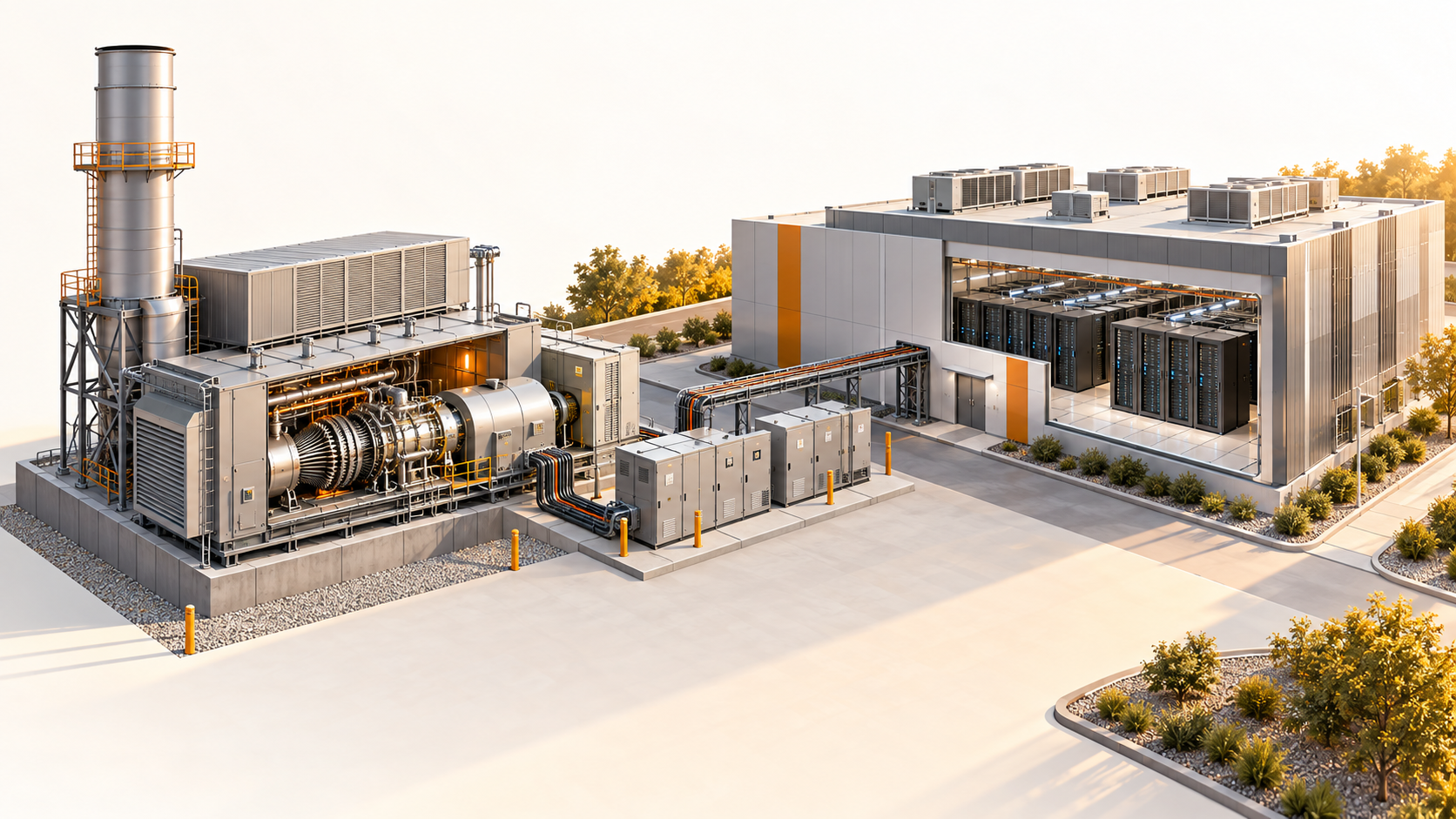
Data center power generation connects electrical resilience with rotating equipment. Gas turbines, engine-driven generators, cooling pumps, fans, and chiller compressors all have different roles. This guide explains the power options and the questions to ask before comparing equipment for a data center or AI computing campus.
How can gas turbines power a data center?
A gas turbine compresses air, burns fuel, and expands hot gas through a turbine. Shaft power drives a generator to produce electricity. In a simple-cycle plant, the turbine produces power without a separate steam power cycle. In combined cycle, recovered exhaust heat produces steam for a steam turbine, providing additional electricity. Heat recovery can also support useful heating or cooling where a suitable demand exists. Read the U.S. Department of Energy explanation of gas turbine power generation.
Prime power, backup power, and grid support
The first decision is the operating duty. A plant intended to run continuously faces a different fuel, maintenance, and efficiency assessment from a unit intended mainly for outages. On-site generation can also be part of a grid-connected arrangement. Siemens Energy describes gas turbine applications for data centers, including a site using turbines for local peaking and backup power. This is an application example, not proof that the same configuration suits every facility. Explore Siemens Energy’s data center power applications.
- Prime or continuous duty: define expected running hours, normal loading, fuel availability, and planned maintenance windows.
- Backup duty: define the critical load, required endurance, starting sequence, and how the electrical system handles the transition.
- Grid-connected operation: define import and export arrangements, protection, controls, and operating constraints.
Which equipment belongs in the discussion?
Compare complete systems rather than nameplate power alone. A generator package, its fuel supply, cooling requirements, controls, and maintenance arrangements must work with the facility’s electrical architecture.
- Gas turbines and generators: electrical generation, with performance assessed for the actual site and operating duty.
- Engine-driven generator sets: another generation option to evaluate against the same load and availability requirements.
- Steam turbines: relevant where a suitable steam source exists, including some combined-cycle configurations.
- Pumps, fans, and compressors: supporting cooling, ventilation, and other plant services. Their electrical demand belongs in the facility load assessment.
Why power and cooling should be planned together
Servers need electricity and a dependable way to remove heat. Combined heat and power can recover useful thermal energy; in appropriate designs, recovered heat can serve absorption cooling. Whether that is worthwhile depends on matching the available heat to a real, sustained demand. The DOE discussion of data center CHP explains these relationships and historical applications. Read DOE’s data center CHP study.
A microgrid assessment also needs to consider both electrical loads and cooling resources. Storage, generation, and operating controls should be evaluated as an integrated system. Read DOE’s overview of microgrids and large electrical loads.
Questions to prepare before contacting an equipment supplier
- What are the initial critical load, total facility load, and expansion phases?
- Is the requirement continuous generation, outage backup, or both?
- What fuel supply and electrical interconnection are available at the site?
- How will the system support essential cooling during a power interruption?
- What maintenance can be performed without interrupting the required service?
- Which site conditions, emissions requirements, noise limits, and delivery constraints must the proposal address?
Common questions about data center power
Does adding a gas turbine automatically provide uninterrupted power?
No. Generation is one part of the power architecture. The design must also address transfer behavior, power quality, controls, and any ride-through or energy-storage requirements. Compare those requirements explicitly when reviewing proposals.
Can I size the plant using IT load alone?
IT load is only part of the picture. Cooling and other facility services also need power. Prepare a facility load schedule and identify which loads must remain available during each operating scenario.
Can one equipment choice suit every data center?
No. A useful comparison starts with the duty, site, fuel, load profile, maintenance strategy, and expansion plan. A project-specific engineering assessment is needed before selecting a configuration.
Continue learning with Rotate-Pro
Explore pump fundamentals and generator operation and maintenance resources. Join the community to connect with rotating equipment professionals, explore jobs, and discover events. Already a member? Sign in.
Original Siemens reference paper
The existing paper below provides additional background on gas turbines and on-site data center generation.